


MingloTalk: AI Character Chat
shopihi
I opened MingloTalk expecting a light entertainment app and found a more flexible idea than a standard chatbot. It is built around talking, playing, and shaping an AI-centered world, so the appeal is less about getting one perfect answer and more about deciding what kind of interaction I want. Sometimes I used it as a quick distraction; at other times, I treated a conversation as the starting point for a small improvised story.
That difference matters. MingloTalk: AI Character Chat is not best understood as a conventional messaging tool, a social network, or a full game with a fixed campaign. It sits between those experiences. The developer, shopihi, presents it as an entertainment app, and that description fits my use: I came back when I wanted an interactive character-driven moment rather than a passive video or a conventional puzzle.
The app is free to install, with optional purchases ranging from $1.99 to $199.99 per item. It is intended for mature users aged 17 and over, which is an important part of the decision rather than a small store detail. Its average rating is 4.7 from around 22 thousand ratings, and it has passed one million installs, suggesting that the format has found a sizeable audience. Still, popularity does not remove the need to understand how the experience actually works, where it feels natural, and where it becomes less satisfying.
From a spare moment to an AI-driven conversation
Choosing the right starting point
My most successful sessions began with a clear purpose. I did not simply open the app and wait for it to entertain me. I decided whether I wanted a playful exchange, a character conversation, or an improvised setting that could develop over several messages. That small choice made the experience feel more directed and reduced the aimless feeling that can affect open-ended AI chat.
For a first session, I recommend starting with a simple situation instead of trying to build an elaborate universe immediately. A short premise gives the conversation somewhere to go while leaving room for the character to respond. For example, I might enter a scene involving a difficult decision, a mysterious visitor, or a fictional companion with a clear attitude. The useful trick is to define the mood and the immediate problem, not every detail of the backstory.
Related News

Why WhatsApp Messenger Still Makes Everyday Communication Feel Easy

Jurassic World: The Game Is the Better Dino Tycoon for Strategic Players

Threads in Real Life: Who Should Join, Lurk, or Leave

How SHEIN Turned Shopping Into an Endless Content Feed

How to Make Fortnite Feel Smarter on Mobile

Should You Switch to Microsoft Outlook on Mobile?
This is where MingloTalk differs from an ordinary assistant. With a productivity chatbot, I usually want a concise answer, a draft, or a practical plan. Here, I am looking for continuity, personality, and a reason to send the next message. If I approach it like a search box, the entertainment value drops quickly. If I treat it like a collaborative prompt-and-response activity, the app makes more sense.
Building a conversation that does not stall
The quality of a session depends heavily on the input I give it. Very broad messages can lead to exchanges that feel interchangeable, while a specific request creates a stronger handoff to the AI character. I had better results when I included a desired tone and an action. “Respond as a guarded guide who knows the route but refuses to explain why” is more useful for an interactive scene than “be interesting.”
A practical workflow is to begin with one role, one setting, and one immediate tension. After the first response, I add information gradually. This gives me opportunities to correct the direction without rewriting the entire premise. It also makes the interaction feel more like play: I can reveal a detail, test a reaction, and decide whether to continue or change the scene.
Gallery
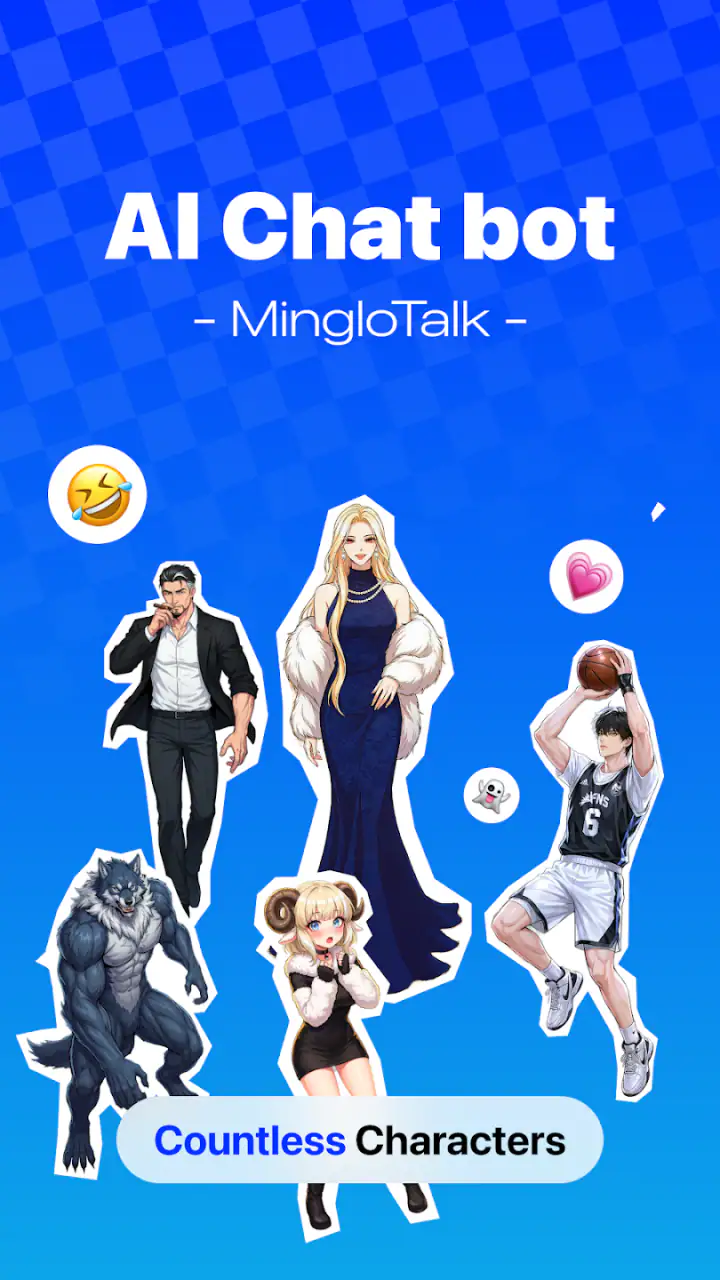
One non-obvious advantage is that the app can turn a short break into a contained creative exercise. I can set myself a small goal, such as resolving a disagreement in a fictional conversation or reaching a particular emotional turn. That is more satisfying than sending random prompts because the session has an outcome. It also makes it easier to stop without feeling that I abandoned an unfinished, sprawling project.
Handing control back and forth
The central handoff happens between my instruction and the character’s response. I provide the situation, the character’s role, or the next action; the app supplies the reaction that I then accept, redirect, or challenge. The best moments came when I did not try to control every line. Leaving some space for surprise made the exchange feel less like filling in a template.
At the same time, I had to remain an active editor. When a response drifted from the tone I wanted, I corrected it directly instead of hoping the next message would repair everything. A short instruction about the mood, pacing, or character motivation was usually more effective than a long complaint. This is a useful habit for any AI character app, but it matters especially here because the entertainment depends on maintaining an imagined context.
I also found that changing the type of request can refresh a flat conversation. Instead of asking the character another question, I can describe an action, introduce a complication, or ask for a reaction to a new choice. That shift creates a clearer handoff. It prevents the session from becoming a sequence of similar questions and answers.
Moving from chat into a personal AI world
The “AI world” idea works best when I think of it as a personal framework for recurring interactions rather than a finished virtual universe waiting to be explored. I can establish a setting, a relationship, and a style of play, then use later messages to develop them. The result depends on how consistently I feed the conversation with meaningful details.
My recommendation is to keep a compact mental rulebook. Decide what the character wants, what they avoid, and what kind of conflict suits the scene. I do not need a long document; three or four guiding points are enough. This creates continuity without turning entertainment into homework. It is also a good way to recover after a conversation wanders: restate the essential rules and continue from the current moment.
There is a trade-off here. The freedom is attractive, but it places creative responsibility on me. Someone who wants a polished story with authored chapters, fixed objectives, and dependable progression may prefer a narrative game or an interactive fiction title. MingloTalk is more open, but that openness means the user has to supply some of the structure.
Everyday scenario: a short evening session
Imagine I have fifteen minutes after dinner and want something more engaging than scrolling through short videos. I open the app and choose a conversational premise: I am trying to persuade a fictional companion to reveal information before an important departure. I give the character a guarded personality and ask for a tense but playful tone.
The first response gives me a starting point. I then choose whether to press for information, offer a compromise, or change the subject. Each choice becomes a new handoff. If the exchange starts repeating itself, I introduce a concrete event, such as a message arriving or a deadline becoming closer. That creates an immediate reason for the character to react.
At the end of the session, I can stop after reaching a small resolution rather than waiting for a grand conclusion. Perhaps the character shares one clue, agrees to meet again, or leaves the decision open. This is a realistic strength of the format: the outcome can be modest but still feel earned because I helped shape it. It is a better fit for short creative breaks than an experience that requires a long uninterrupted play session.
Where the handoffs become frustrating
The same openness that supports improvisation can also expose the app’s limits. An AI character may not always preserve every detail or maintain the exact emotional rhythm I intended. When that happens, the conversation can feel less like a shared scene and more like repeated course correction. I consider this the main friction point for anyone expecting strict continuity.
There is also a learning curve in discovering how much direction to provide. Too little input can produce generic exchanges; too much can make the interaction feel rigid. Finding the middle takes experimentation. I would not recommend judging the app from one vague opening message, but I also would not blame a user who loses patience if they want immediate, polished storytelling.
The mature age rating deserves practical attention as well. I would not hand the app to a child or treat it as a family-friendly substitute for a general entertainment app. Adults should also remember that an AI character experience is designed to simulate interaction, not to replace real relationships, professional advice, or trusted human support. That boundary is especially important when a conversation becomes emotionally intense.
Cost and the decision to continue
The free entry point makes it easy to test whether the style suits me before spending anything. I would begin by exploring the basic experience and only consider an in-app purchase after identifying a genuine reason to keep using the app. The available purchase range is wide, from $1.99 to $199.99 per item, so I would check each purchase carefully rather than assuming every option has the same value.
This is one area where MingloTalk may not suit everyone. If I only want an occasional novelty, the free starting point may be enough. If I become deeply invested in extended character interactions, I need to set a personal spending limit before buying. The entertainment value comes from the quality and continuity of the interaction, not from collecting purchases for their own sake.
I also prefer to decide what I want from a session before considering an upgrade. If the problem is that my prompts are unclear or the scenario lacks direction, spending more may not solve it. Better setup and more deliberate choices can improve an ordinary session without any purchase. That is an important distinction for a free entertainment app with optional paid items.
How it compares with familiar alternatives
Compared with a general-purpose AI assistant, MingloTalk feels more focused on character-led entertainment. A general assistant is usually better when I need factual research, structured writing, calculations, or a dependable work output. MingloTalk is more appealing when the goal is to sustain a fictional exchange and see how a character responds to choices.
Compared with a conventional story game, it offers more freedom but less authored certainty. A traditional game can provide designed pacing, explicit objectives, and carefully planned consequences. Here, I have more influence over the direction, yet the result can be uneven because the conversation is not following a fixed script. I would choose MingloTalk for improvisation and a story game for a more controlled narrative.
It also differs from ordinary social entertainment because the interaction is centered on AI characters rather than friends, public posts, or live communities. That makes it convenient when I want a private activity, but it removes the unpredictability and genuine mutuality of talking with another person. The app can imitate a conversational role; it cannot offer the responsibilities and understanding of a real friend.
Who will get the most from it
I think the strongest audience is adults who enjoy role-play, conversational storytelling, character experiments, and short creative sessions. Writers may use it to test a fictional conflict or explore how a personality reacts under pressure. Casual users may enjoy it as a more active alternative to passive entertainment, provided they are willing to guide the exchange.
It is less suitable for someone who wants a factual reference tool, a competitive game, or a guaranteed story ending. I would also suggest skipping it if open-ended conversations feel tiring rather than fun. The app asks me to contribute ideas, make choices, and repair the direction when necessary. That is part of its charm, but it is also part of the workload.
Users on older compatible devices should note that the minimum operating system is Android 7.0. The current version is 1.0.8, so I would keep the app updated when possible and judge it as an evolving entertainment experience rather than a fully established story platform. The developer is shopihi, and the app’s presentation clearly aims at a broad audience interested in AI character interaction.
My practical method for better sessions
I would use a three-stage routine. First, define the immediate situation in one or two sentences. Second, give the character a motivation and a boundary, such as something they want and something they refuse to discuss. Third, introduce complications one at a time. This keeps the exchange readable and gives each response a clear purpose.
When a scene loses energy, I would not restart immediately. I would try one of three repairs: introduce a consequence, change the location, or ask the character to make a difficult choice. These interventions are more useful than repeating the same question. They also reveal whether the app can recover a conversation or whether the premise has simply run out of momentum.
For longer creative use, I would keep my own brief notes outside the app about names, goals, and unresolved details. That is a small extra step, but it protects continuity when I return later. It also prevents me from expecting the app alone to function as a perfectly organized story bible. The trade-off is clear: I gain flexibility, but I must provide some memory and direction myself.
The outcome after regular use
After using it with this workflow, I see MingloTalk as a tool for interactive imagination rather than a replacement for games, messaging, or general AI utilities. Its strongest result is a conversation that feels shaped by my decisions while still leaving room for an unexpected response. When the setup is specific and the session has a small goal, the app can turn a few spare minutes into a memorable creative diversion.
Its weaker result is an exchange that starts without a clear premise and gradually becomes repetitive. In that situation, the open format works against it. I have to decide whether to redirect the scene, start a new one, or stop. That is not a deal-breaker for me, but it means the app rewards active users more than passive ones.
My recommendation is to try it if you want guided improvisation, not guaranteed storytelling. The free starting point lowers the risk of testing the idea, while the mature rating and broad purchase range call for sensible boundaries. I would choose it over a standard chatbot when I want a character-centered escape, and over a fixed narrative game when I want to steer the situation myself.
In the end, MingloTalk works when I arrive with a small creative intention and treat the AI as a scene partner rather than an all-knowing author. It is not the right choice for every kind of entertainment, but for adults who enjoy building conversations one decision at a time, it offers a distinctive way to turn an ordinary pause into a personal AI world.
FAQs for MingloTalk: AI Character Chat
What is MingloTalk: AI Character Chat, and how does it work?
MingloTalk: AI Character Chat is an interactive chatbot app that lets you communicate with AI-powered characters through text conversations. You can choose from different personalities or fictional-style profiles and start chats based on your interests. The characters respond dynamically, making the experience feel more personal than a standard question-and-answer assistant. However, responses are generated by artificial intelligence and may occasionally be inaccurate, repetitive, or inconsistent with the character’s description.
Is MingloTalk: AI Character Chat free to download and use?
The app may be available to download for free, but access to all features can depend on the current subscription model. Some characters, conversation limits, premium messages, customization tools, or advanced functions may require in-app purchases or a paid plan. Before starting an extended conversation, check the app’s store listing and payment screen carefully. Also review whether subscriptions renew automatically and how cancellation works on your Android or iOS device.
Does MingloTalk protect private conversations and personal information?
You should avoid sharing sensitive information in MingloTalk conversations, including passwords, financial details, exact addresses, private documents, or anything you would not want stored or reviewed. AI chat services may process messages to provide responses, improve their systems, or support the service, depending on their privacy policy. Before downloading, read the developer’s latest privacy information and check what data may be collected, retained, or shared with third parties.
Can MingloTalk: AI Character Chat be used by children and teenagers?
The suitable age for MingloTalk depends on the rating shown in the Google Play Store or Apple App Store and on the content available inside the app. AI characters can sometimes produce unexpected, emotionally intense, romantic, or mature responses, even when a conversation begins innocently. Parents should review the app’s rating, privacy practices, parental controls, and in-app purchase settings before allowing younger users to install or use it.
Does MingloTalk require an internet connection, and what should I do if responses are slow or incorrect?
MingloTalk generally requires an active internet connection because conversations are processed through online AI services rather than entirely on your device. Response speed can vary according to your connection, server traffic, and the complexity of the request. If chats fail or become slow, try switching networks, restarting the app, updating it, or checking for service outages. Remember that AI characters can misunderstand context, so verify important information independently.
Pros
- Wide range of AI characters with different personalities and conversation styles.
- Simple chat interface makes it easy to start conversations quickly.
- Useful for casual entertainment
- roleplay
- and creative storytelling.
- Characters can provide engaging replies that help keep conversations flowing.
- Suitable for users who enjoy private
- on-demand virtual companionship.
Cons
- Responses may sometimes feel repetitive
- generic
- or inconsistent with a character.
- Some features or characters may require in-app purchases or a subscription.
- AI conversations can occasionally produce inaccurate or inappropriate content.
- Extended chatting may consume considerable battery and mobile data.
- Privacy details should be reviewed carefully before sharing personal information.


